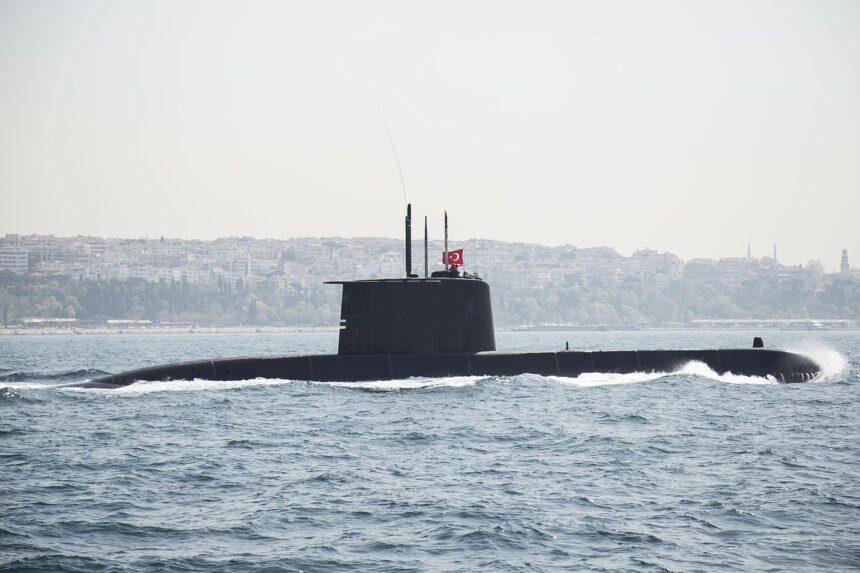
Modern submarines are designed to operate underwater for extended periods while remaining difficult to detect. One of the biggest challenges for conventional diesel-electric submarines is the need to surface regularly to recharge their batteries. This process increases the risk of detection by enemy radar, aircraft, and naval forces.
Air Independent Propulsion (AIP) is an advanced submarine propulsion technology that allows conventional submarines to remain submerged much longer without needing atmospheric oxygen. By reducing the need to surface, AIP significantly improves stealth, endurance, and operational effectiveness.
Today, AIP has become an essential technology for many modern navies because it bridges the gap between traditional diesel-electric submarines and expensive nuclear-powered submarines.
What Is Air Independent Propulsion?
Air Independent Propulsion (AIP) is a propulsion system that enables non-nuclear submarines to generate power while submerged without relying on oxygen from the atmosphere.
Unlike conventional diesel engines, which require air for combustion, AIP systems use alternative technologies such as fuel cells, Stirling engines, closed-cycle diesel engines, or steam turbines. These technologies produce electrical energy that powers the submarine’s electric motors while keeping it underwater for weeks instead of only a few days.
As a result, submarines equipped with AIP can conduct longer patrols with a much lower chance of being detected.
Why Is Air Independent Propulsion Important?
Modern naval warfare demands stealth and endurance. A submarine that frequently surfaces becomes vulnerable to surveillance satellites, radar systems, and anti-submarine aircraft.
Air Independent Propulsion provides several operational advantages:
- Longer underwater endurance
- Improved stealth capabilities
- Reduced acoustic signature
- Lower probability of enemy detection
- Greater mission flexibility
These advantages make AIP-equipped submarines highly valuable for coastal defense, intelligence gathering, and surveillance missions.
How Does Air Independent Propulsion Work?
Unlike conventional diesel engines, AIP systems do not rely on atmospheric oxygen.
Instead, they generate electricity using stored oxidizers or chemical reactions. The electricity is then used to charge onboard batteries or directly power the electric propulsion motors.
Although different AIP technologies operate differently, their primary objective remains the same: generating underwater power without surfacing.
Types of Air Independent Propulsion Systems
- Fuel Cell Systems
Fuel cell technology is considered one of the most advanced AIP solutions.
Fuel cells generate electricity through a chemical reaction between hydrogen and oxygen. Since there is no combustion process, they operate very quietly, making submarines significantly harder to detect.
Advantages include:
- Extremely quiet operation
- High efficiency
- Low emissions
- Long underwater endurance
- Stirling Engine System
The Stirling engine is an external combustion engine that uses liquid oxygen along with diesel fuel to produce power.
Several modern submarines use Stirling engines because they are reliable and relatively simple to maintain.
Benefits include:
- Proven technology
- Good fuel efficiency
- Longer submerged operations
- Closed-Cycle Diesel Engine
A closed-cycle diesel engine uses stored oxygen instead of atmospheric air.
This allows the engine to continue operating underwater while maintaining a familiar diesel engine design.
Although effective, it is generally noisier than fuel cell systems.
- Steam Turbine AIP
Some submarines employ steam turbines powered by stored oxidizers.
While capable of producing significant power, these systems are less common in modern submarine designs because newer technologies offer better efficiency and quieter operation.
Advantages of Air Independent Propulsion
Extended Underwater Endurance
Perhaps the greatest advantage is the ability to remain submerged for several weeks instead of only a few days.
Increased Stealth
By avoiding frequent surfacing, submarines become much harder to detect using radar or visual observation.
Lower Operating Cost
Compared with nuclear-powered submarines, AIP submarines are considerably less expensive to build and maintain.
Improved Mission Capability
Longer underwater endurance enables submarines to conduct:
- Reconnaissance
- Intelligence gathering
- Coastal surveillance
- Anti-ship operations
- Special forces deployment
more effectively.
Disadvantages of Air Independent Propulsion
Although AIP offers many advantages, it also has limitations.
Limited Power Output
AIP systems produce less power than nuclear reactors.
Lower Maximum Speed
Submarines generally rely on battery power for high-speed maneuvers.
Increased System Complexity
Advanced propulsion technologies require specialized maintenance and crew training.
Storage Requirements
Some AIP systems require storing liquid oxygen or hydrogen, which increases design complexity and safety requirements.
Air Independent Propulsion vs Nuclear Propulsion
| Feature | Air Independent Propulsion | Nuclear Propulsion |
| Underwater Endurance | Weeks | Months |
| Cost | Lower | Very High |
| Maintenance | Moderate | Complex |
| Maximum Speed | Moderate | High |
| Noise Level | Very Low | Low |
| Best Use | Coastal & Regional Operations | Global Blue-Water Operations |
Countries Using Air Independent Propulsion
Many countries have adopted AIP technology for their submarine fleets, including:
- Germany
- Sweden
- Japan
- South Korea
- India
- China
- Singapore
Each country uses different AIP technologies based on operational requirements and submarine design.
Future of Air Independent Propulsion
Research continues to improve AIP systems through:
- More efficient fuel cells
- Advanced battery integration
- Hydrogen storage improvements
- Hybrid propulsion technologies
- Reduced acoustic signatures
Future submarines are expected to combine lithium-ion batteries with advanced AIP systems to achieve even longer underwater endurance and improved performance.
Frequently Asked Questions (FAQs)
What is Air Independent Propulsion?
Air Independent Propulsion is a technology that enables conventional submarines to operate underwater for extended periods without using atmospheric oxygen.
Which submarines use AIP?
Many modern diesel-electric submarines operated by countries such as Germany, Sweden, Japan, India, and South Korea use AIP technology.
Is AIP better than nuclear propulsion?
AIP is quieter and more affordable, while nuclear propulsion offers much greater endurance and speed. Each serves different operational needs.
Why is AIP important?
It improves submarine stealth, extends underwater endurance, and reduces the need to surface, making submarines more effective in modern naval operations.
Conclusion
Air Independent Propulsion has transformed the capabilities of conventional submarines by allowing them to remain submerged for longer periods while maintaining a low acoustic signature. Although it cannot completely replace nuclear propulsion, AIP provides an excellent balance between cost, stealth, and operational efficiency. As fuel cell technology, advanced batteries, and hybrid propulsion systems continue to evolve, Air Independent Propulsion is expected to remain a key technology in the future of naval defense.